
EHS Management Consulting

  • Home
  • EHSMS Consulting
Workplace Safety Consulting

EHS SOLUTIONS

EHS Management Consulting

Our EHS Management Consulting services help organizations identify workplace hazards, ensure regulatory compliance, and implement effective safety systems. We partner with businesses to build a strong safety culture that protects employees, assets, and operations.

From risk assessments and safety audits to policy development and training programs, our experts deliver customized solutions aligned with international EHS standards.

  • Safety Maturity Survey (SMS)
  • Behavioral Intervention Program
  • Incident Reporting & Investigation
  • Contractor Safety Management
  • High Hazard Process Management
  • Rail & Road Safety Management
  • Process Safety Management
  • Capability & Competency Development

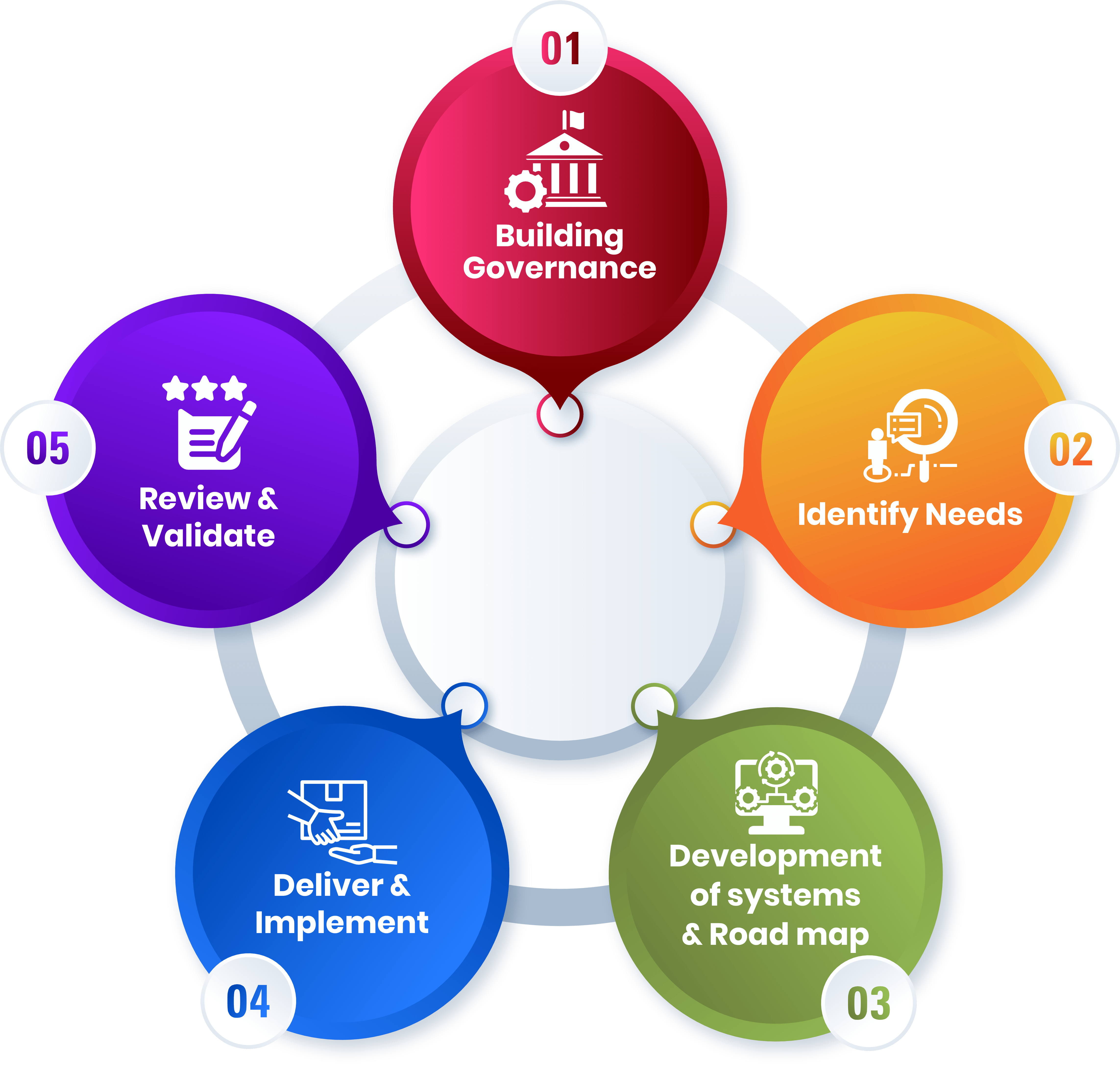
A Safety Assessment Approach Using Safety Enablers

Building Governance

Formation of committee for good governance, Capability building of top leaders, Identify Roles & Responsibilities, Define Line Management (For HSE management)

Identify Needs / Gaps

Conduct Safety Maturity Surveys, Gap Analysis and study, Understand the organizational culture, Identify associated risks

Development of systems & Road map

Build & integrate foolproof systems for delivering, tracking & monitoring processes, Define various methods to implement and validate results, Change Management System, Set KPIs as per benchmarks set, Build analytical tools to monitor and evaluate systems

Deliver & Implement

Deliver Training as per need, Use diverse & innovative methods for delivery, Implement Digital Systems to set status of recommendation, Introduce a rewards system to motivate & improve safety culture

Review & Validate

Build digital systems to review / analyze trends of activity / validation, Performance data indicators, Identify key focus areas

Safety Assessment 5 Steps

Safety Management Consulting

Comprehensive EHS solutions for prevention, compliance and continual safety improvement

Incident Reporting & Investigation System

Accident, incident and near-miss reporting is a crucial part of an effective EHS programme to identify trends, establish root causes and prevent recurrence. CORE EHS supports customers in implementing structured reporting procedures and analytical documentation systems. Effective systems begin with reporting and recordkeeping of At-Risk Behaviour and Near Misses at all organizational levels.
Safety Maturity Survey & Gap Analysis

A Safety Maturity Survey evaluates employee and management perceptions, attitudes and behaviours related to workplace safety culture. CORE EHS conducts customized surveys through questionnaires, interviews, audits and data reviews to identify gaps and develop structured improvement roadmaps aligned with LTIFR benchmarks.

Contractor Safety Management

Contractor Safety Management controls risks associated with contractor activities through qualification, monitoring and evaluation. The process includes contractor selection, site induction, competency certification, execution monitoring, post-job evaluation and corrective actions.

Development & Upgradation of Safety Management Systems

Existing safety management systems are reviewed and upgraded to global best practices. This includes high-risk standards, SOPs, work instructions, responsibility matrices, audit frameworks and SAP integration.

Road Safety Management through Engineering Controls

Road Safety Management focuses on reducing transport-related risks through engineering controls, AI-based monitoring and policy frameworks including traffic movement, vehicle segregation, loading/unloading and site layout optimization.

EHS Management Pyramid

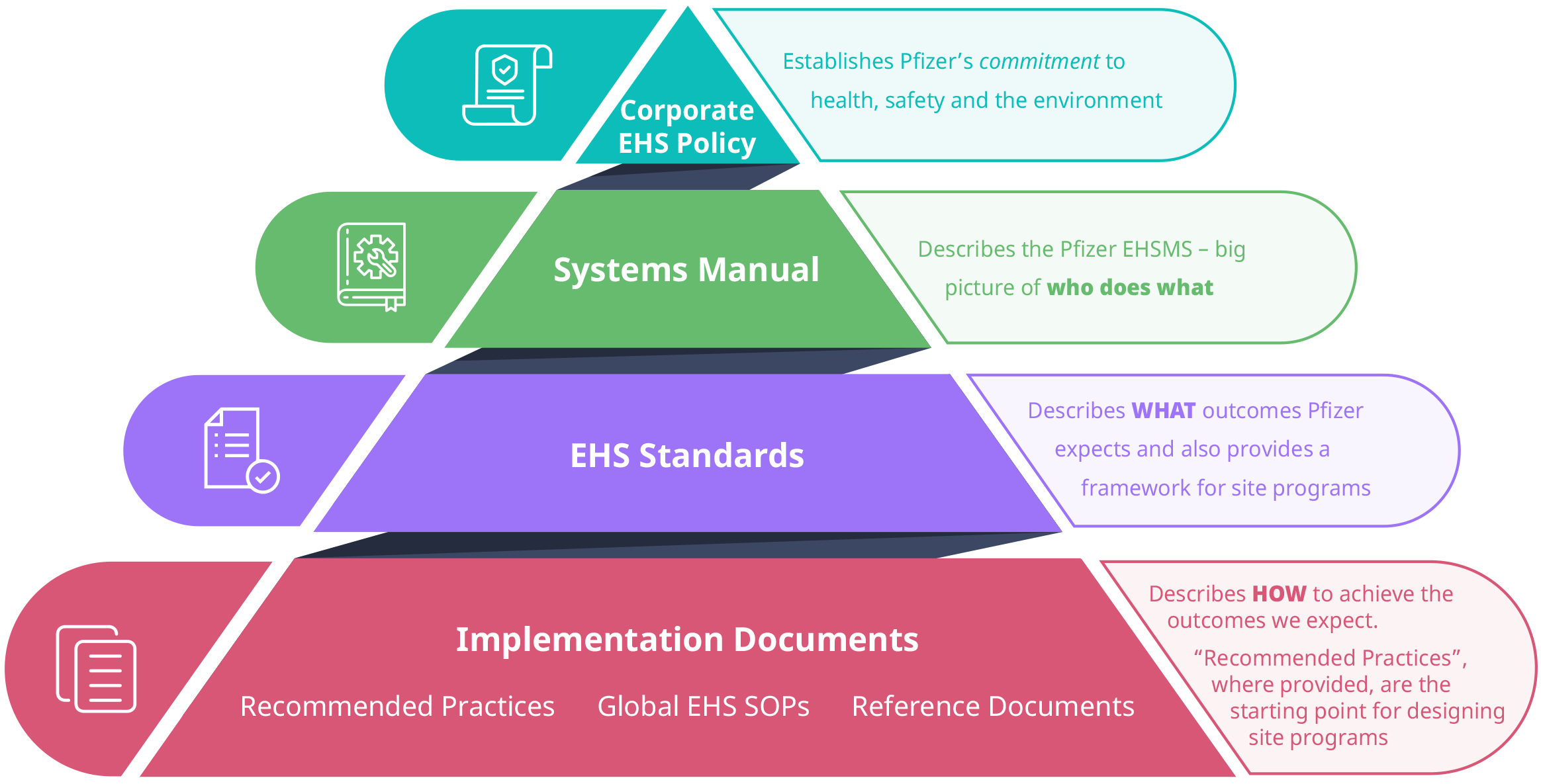
EHS Management Framework Pyramid

A structured approach defining commitment, accountability, expectations, and execution across Environmental, Health & Safety management systems.

Corporate EHS Policy

Establishes organizational commitment to health, safety and the environment, setting the foundation for EHS leadership.

Systems Manual

Describes the EHS Management System and provides clarity on responsibilities — the big picture of who does what.

EHS Standards

Defines WHAT outcomes are expected and provides a structured framework for site-level EHS programs.

Emergency Preparedness & Disaster Management

Emergency Preparedness and Disaster Management is a systematic approach to planning, responding to, and recovering from emergency situations and disasters. It ensures that organizations are ready to protect life, property, and the environment during unforeseen events.

By identifying potential emergency scenarios and establishing clear response strategies, organizations can minimize damage, reduce downtime, and ensure a coordinated and effective response during crises.

Emergency Risk Identification

Identifying potential natural, industrial, fire, medical, and security-related emergency scenarios.

Emergency Response Planning

Developing structured emergency response plans with defined roles, responsibilities, and procedures.

Evacuation & Assembly Procedures

Establishing safe evacuation routes, assembly points, and accountability procedures.

Emergency Equipment & Resources

Ensuring availability and readiness of fire extinguishers, alarms, first-aid kits, and emergency tools.

Emergency Drills & Mock Exercises

Conducting regular drills to test preparedness and improve response efficiency.

Disaster Response Coordination

Coordinating with internal teams and external agencies for effective disaster response.

Business Continuity Planning

Ensuring continuity of critical operations and quick recovery after emergencies.

Training & Awareness

Training employees to respond calmly and correctly during emergencies to reduce panic and confusion.

The main components of an Emergency
Response & Disaster Management Plan
(ERDMP)

01

Risk Assessment
and Hazard
Analysis

02

Evaluation and
Continuous
Improvement

03

Preparedness

04

Communication
and Information
Management

05

Legal and
Regulatory
Framework

Contractor Safety Management

A structured approach to managing contractor risks through safe practices, regulatory compliance, and continuous performance monitoring.

Pre-Qualification

Contractor pre-qualification is the first and most critical step in contractor safety management. It involves a detailed evaluation of safety performance, accident history, legal compliance, certifications, and workforce competency.

This process ensures that only contractors with proven safety systems, trained manpower, and adequate resources are allowed to work on-site, reducing potential risks from the beginning.

Effective pre-qualification helps prevent incidents, regulatory violations, and costly project disruptions during execution.